
The Greekish Life
Travel
7 Fairytale Places in Greece That Look Too Beautiful To Be Real
Beyond the beaches and into a storybook

All photography by me unless otherwise credited.
Greece is full of places that seem as though they belong in the pages of a fairytale. From medieval castles and centuries-old stone bridges to mountain villages, hidden waterfalls, and monasteries perched high above the clouds, some of the country's most enchanting destinations are also among its most unexpected. And while the Greek islands certainly have their share of magical scenery, there are just as many beautiful places to discover on the mainland.
If you've been on this site for any length of time, you know I'm a big fan of not only the well-known spots, but also the tucked-away, less familiar places, and everywhere in between. This selection is a mix from along that spectrum.
So please allow me to be your travel fairy godmother for a bit. Here are seven fairytale places in Greece where history, nature, and a little bit of magic come together.
1. Assos, Kefalonia

I'll come clean with you - I was 100% influenced to come here after seeing photos on Instagram. I'd never even heard of it, but it ended up being one of my favorite island locations.
Tucked away on the northwestern coast of Kefalonia, the little village of Assos definitely looks like something straight out of a storybook. Candy-colored houses cluster around a sheltered bay, surrounded by green hills and the impossibly blue waters of the Ionian Sea.


The village sits on a narrow strip of land connecting Kefalonia to a small, wooded peninsula, giving it one of the most picturesque settings in all of Greece. With its quiet waterfront, sailboats, and a handful of tavernas overlooking the sea, Assos isn't the place you go for excitement, but rather to have every cell in your body gently slip into recovery mode.
Adding to its enchanted vibe is the Venetian castle that sits high above the village (because what's a fairytale without a castle?). The Castle - or Kastro - of Assos was once an important defensive stronghold, and its surviving walls and ruins can still be explored today. A scenic uphill walk leads through olive trees and Mediterranean vegetation to the castle, where visitors are rewarded with beautiful views of the coastline and surrounding sea.

Back in the village, the narrow streets and flower-filled courtyards make for some serene and photogenic wandering. In 1953 what became known as the Great Kefalonia Earthquake with it's 6.8 magnitude strength destroyed many homes and buildings on the island. Nature has gently reclaimed the ruins of some of these places in Assos, and the eerily beautiful remains, covered in flowering vines and gnarly tree roots, are a reminder of the event.
A small pebble beach makes for a relaxing afternoon, and around the corner, there's an unorganized beach with some of the most spectacular shades of turquoise and green I've ever seen.


From Assos, you can get a taxi or drive north to the beautiful seaside town of Fiskardo, a popular destination for sailing.
I stayed 3 days/2 nights in Assos, which was about perfect for my needs. If you're planning a trip to Kefalonia, try to visit Assos for at least a day, and stay a bit longer if you can. You won't be sorry.

2. Meteora, Thessaly

There are few places in Greece quite as extraordinary as Meteora. Rising dramatically above the plains of Thessaly, enormous sandstone pillars tower over the landscape, some crowned with centuries-old monasteries that seem to float between heaven and earth.
This is a truly otherworldly destination. Depending on the weather and time of day, the towering rocks can be surrounded by mist, bathed in golden sunlight, or silhouetted against a dramatic sky, creating a scene that looks almost too magical to be real.


The architecture of monasteries themselves looks mythical. And in the above photo you can see a little white box on a cable that runs between the peaks where goods are moved from one tower to another.

Meteora (meh-TAY-or-ah, not "mee-tee-OR-ah", please) is also one of Greece's most important religious and historical sites. Monks began seeking solitude among these isolated rock formations as early as the 11th century, and over time, 24 monasteries were established on the towering cliffs.
Today, six monasteries remain active and are open to visitors on designated days. Inside, you'll find beautiful Byzantine frescoes, historic religious treasures, and a glimpse into a monastic tradition that has survived for centuries.


Recognized as a UNESCO World Heritage Site in 1988, Meteora is an unforgettable destination, whether you're exploring its monasteries, hiking along old footpaths, or simply admiring the spectacular views. There are organized group tours from Athens if you want to do a day trip. It's quite a long drive, so if you plan to self-drive you might consider spending a night in the area if you don't want to drive back tired in the dark.

3. Edessa, Macedonia

Known as the City of Water, Edessa is one of the most enchanting towns in northern Greece.
Located in the region of Central Macedonia, this charming city is famous for its spectacular waterfalls, which tumble over a steep cliff surrounded by lush vegetation. The most impressive is Karanos, a magnificent waterfall that plunges into the gorge below. With the luxuriant greenery and crashing water, I had flashbacks of Hawaii for a moment when I first saw it.

What's crazy about the falls at Edessa is that they're in the middle of a city. They're not tucked away in the mountains with a long drive or a hike to get to them. You pass multi-story apartments, shops and typically Greek parking issues (if you know, you know) on your way there.
It's an urban waterfall, which makes it kind of amazing.
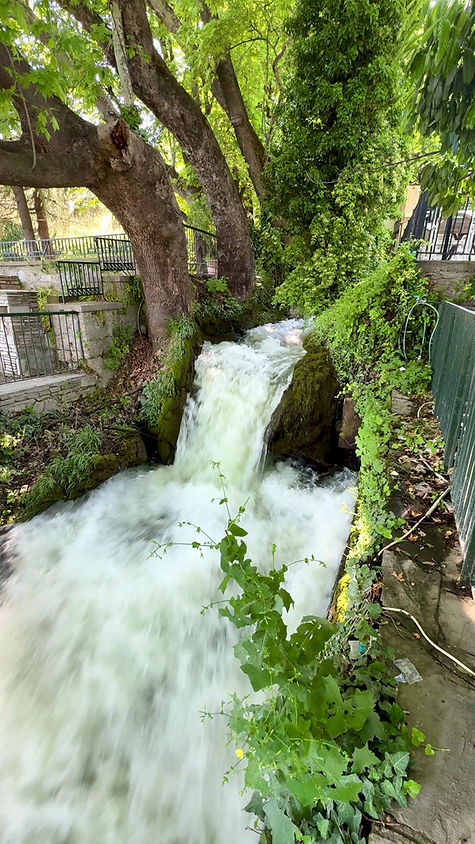
Visitors can follow planted pathways through the beautiful Waterfalls Park, crossing little bridges and walking beneath towering plane trees. There's even a walkway that leads behind the waterfall itself, where you can experience the rushing water from an entirely different perspective. With mist rising from the falls and greenery all around, it's easy to imagine you've wandered into an enchanted forest.

But there's more to Edessa than its waterfalls. The historic neighborhood of Varosi is filled with traditional Macedonian houses, cobblestone streets, and beautiful old churches that give the town an old-world atmosphere. Small streams and canals wind their way through the city, a reminder of the important role water has played in Edessa's history. The town was once a center of textile production, with water-powered mills and factories that are now part of its industrial heritage. Visitors can learn more about this history at the Open-Air Water Museum or simply enjoy a leisurely stroll through the town's picturesque streets. Edessa is supposed to be particularly beautiful in spring and autumn, when the surrounding greenery and changing colors make the scenery even more magical.


4. The Roman Aqueduct of Nikopolis, Epirus

Hidden in the hilly green countryside of Epirus are the remarkable remains of the Roman Aqueduct of Nikopolis, one of the most fascinating ancient engineering projects in Greece.
The impressive ruined arches, overgrown with determined vegetation and rising over the green waters of the Louros River, look like they could have been a backdrop for a scene in Middle Earth.

There's some discrepancy as to when it was actually built - some say during the reign of Octavian Augustus and others say Hadrian - the aqueduct once carried fresh water over a distance of approximately 50 kilometers from the springs of the Louros River to the ancient city of Nikopolis, near modern-day Preveza.


While it served a perfectly mundane and necessary purpose in it's day, now it looks like a beautifully haunted ruin. With dragonflies darting between it's stones and the burble of the river, this place feels like the remains of a long-forgotten mythical kingdom. For anyone interested in history, photography, or discovering lesser-known places in Greece, the aqueduct is a wonderful stop while exploring Epirus.

5. Old Town Rhodes, Dodecanese Islands

How much do I love this place? How badly to I want to go back?
(Lots. Lots is the answer to both.)
Step through the massive stone gates of Rhodes Old Town and suddenly you're back in the Middle Ages.
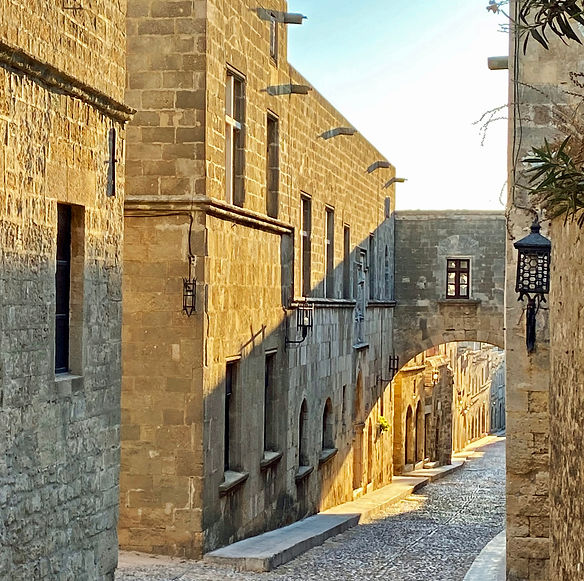

Surrounded by impressive medieval fortifications with several imposing gates, this beautifully preserved historic town surrounded by the modern city of Rhodes is a maze of narrow cobblestone streets, stone archways, hidden courtyards, and centuries-old buildings.
Bougainvillea and hibiscus spill over walls and little squares and fountains appear unexpectedly around corners. It's the kind of place where wandering without a particular destination is half the fun, because you never know what beautiful little vignette you might discover next. You'll see a minaret, then a church bell tower, then a lively taverna, a shop selling local ceramics or other treasures, a castle turret...all on repeat.


The medieval city of Rhodes is a UNESCO World Heritage Site, with much of its character shaped by the Knights of St. John, who ruled the island from for a couple of centuries during the Middle Ages (see more on these folks, as well as more on Rhodes in general here).
Among its most impressive landmarks are the Palace of the Grand Master, with its perfect fairytale towers and grand interiors, and the famous Street of the Knights, one of the best-preserved medieval streets in Europe.

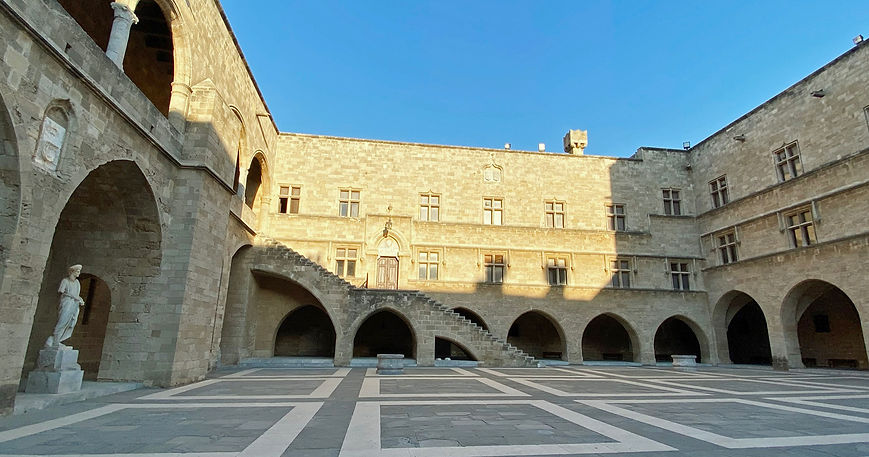

But Rhodes Old Town also reflects centuries of Ottoman and Italian influence, giving it a fascinating mix of architectural styles. Beyond the main attractions, you'll find adorable little shops, traditional tavernas, and quiet residential streets that have retained their historic character. It's especially atmospheric in the evening, when the stone buildings glow under the streetlights and the town takes on its most mysterious appearance.


6. The Paleokarya Bridge, Thessaly

Deep in the green countryside of Thessaly, in the Trikala region, stands one of the most beautiful stone bridges in Greece. The Paleokarya Bridge (also spelled Palaiokarya Bridge) is definitely fairytale-worthy.
Its elegant stone arch spans a narrow gorge, framed by dense trees and two cascading waterfalls. Behind the bridge, water drops dramatically down the rocks into the river below, while a smaller waterfall flows in front of it. The combination of the old stone bridge, rushing water, and surrounding greenery creates an almost unimaginably stunning landscape. I can only imagine how gorgeous it must be in the height of autumn!
The bridge dates to around the middle of the 16th century and was once an important crossing connecting communities in this mountainous part of Thessaly. Measuring approximately 85 feet/26 meters in length, it is a beautiful example of the traditional stone bridge construction so common on the mainland.
The bridge is easily reached by road and has become a favorite destination for photographers and nature lovers. Despite its growing popularity, it remains a peaceful place to enjoy the scenery and appreciate one of the most photogenic historic bridges in Greece.


7. The Zagorochoria, Epirus

High in the Pindus Mountains of Epirus lies Zagori, a region of magical, traditional stone villages that feels like a world of its own.
Known collectively as the Zagorochoria ("villages of Zagori"), these picturesque settlements are famous for their beautifully preserved stone houses, slate roofs, cobblestone lanes, and arched stone bridges. Surrounded by dense forests and dramatic mountains, the villages have a timeless quality that makes them feel almost untouched by the modern world.

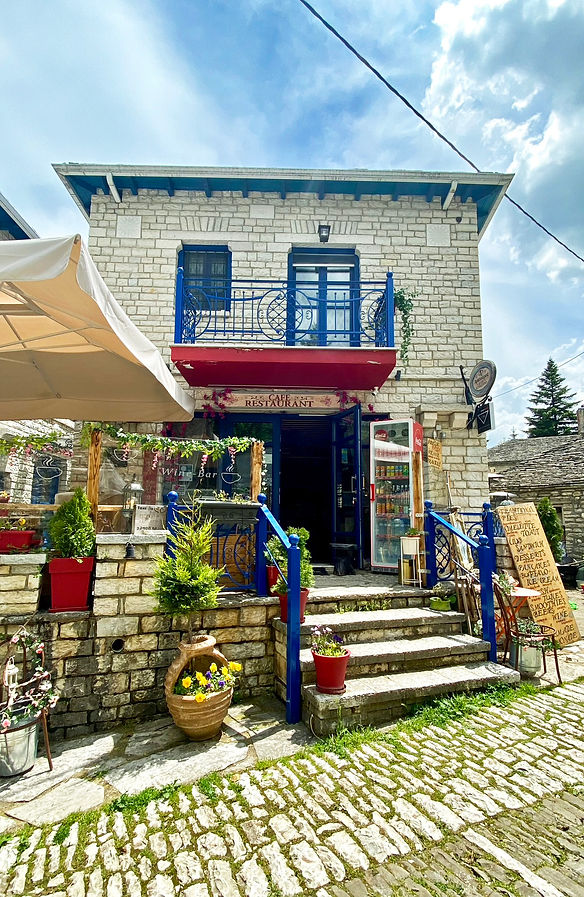

One of the most remarkable is Vradeto, the highest village in Zagori, situated at an altitude of approximately 4396 feet/1,340 meters. Small and peaceful, with traditional stone architecture and spectacular mountain scenery, Vradeto is a wonderful place to experience the quieter side of Greece.
I was fortunate enough to stay in the village one night, at the inn of a couple who were Sarakatsani - an ancient indigenous Greek ethnic subgroup that have traditionally been nomadic herders. Our hosts still moved their cattle seasonally, although now they did it with trucks and not on foot on a grueling cross-country trek the way their ancestors did.

One of Vradeto's most fascinating features is the famous Vradeto Steps, or Skala Vradetou, an extraordinary and frankly kind of terrifying stone staircase that zigzags up the mountainside, connecting the village with nearby Kapesovo.
Built in the 19th century, the path has approximately 1,200 steps and 39 turns, and for generations it served as the main route into the village.

Photos of the Vredeto Steps are by my cousin, who did not want credit for them.
But don't we love her for offering these?


I did not walk these stairs, my friends.
Look at the photos - taken by my more fit cousin and her husband - and tell me if they look like something that would be fun for a lady with wonky knees.
But I got a full report back, and I do wish I would have been able to handle walking them, because...just look at the views!
The little villages of the Zagorochoria, including Monodendri, Dilofo, Vitsa and maybe the most wondrous - Papingo, which sadly we didn't get to because of bad weather - are lovely and marvelous in their own right.

Unlike some of Greece's better-known destinations, Zagori is a place where the appeal lies in slowing down, exploring the villages, enjoying the wild mountain scenery, and discovering little corners that look like they probably did a hundred years or more ago. Whether you're crossing an old stone bridge, taking on the Vradeto Steps, or wandering through a quiet village, it's easy to see why Zagori is one of the most magical places in Greece.

So if you're looking to add a little sprinkle of stardust to your Greek vacation (or just want experiences and photos that not everyone else has), go beyond the beaches and city nightlife and find your way to one of these remarkable places.
Whether it's a medieval stone village, a town where actual knights used to walk, or monasteries that seem to defy gravity, there's something wondrous and awe-inspiring about discovering a corner of Greece that looks like it belongs in a storybook.
And the best part? No magic wand or enchanted carriage required. Just a little curiosity, a willingness to venture off the usual tourist trail, and a good pair of walking shoes. Your efforts will be well rewarded.
Want more Greek travel, photography and tips? Check out the Travel section!
Like this article?
Please Pin it on Pinterest and
Share on Facebook!
Leave a comment below!

